






Overview Of Sprinkler Irrigation Systems: A Highly Efficient And Flexible Choice For Modern Irrigation
Oct 14, 2025
Leave a message
As an important technology for modern agriculture and landscaping irrigation, sprinkler irrigation systems are widely used in various production and living scenarios due to their water-saving, high-efficiency, and adaptability. This system uses a specially designed pipeline network and spraying devices to deliver water at a certain pressure to the sprinklers. After atomization or spraying, the water is evenly distributed over the irrigated area, simulating natural rainfall and achieving comprehensive irrigation of crops or green spaces.
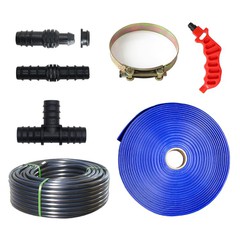
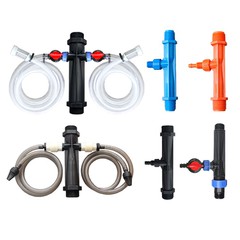
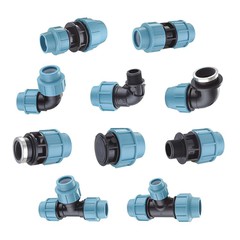
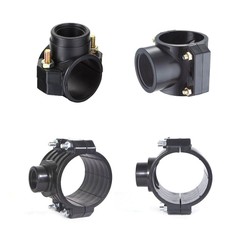
From a working principle perspective, a sprinkler irrigation system generally consists of a water source project, pressurization equipment, a water distribution network, sprinklers, and control accessories. The water source can be a river, reservoir, well, or water storage tank. After purification and regulation, the water is pumped to provide the necessary pressure, allowing the water to be transported to the fields or green spaces along the pipelines. The pipeline network system is arranged in a hierarchical manner, with main pipes, branch pipes, and risers to guide the water flow to each sprinkler position. Depending on the structure and spraying method, sprinklers can form various spray patterns, such as rotary, fixed, and refractive sprays, to adapt to different crop types, densities, and terrain conditions. Control components are used to adjust pressure, flow rate, and irrigation time, enabling zoned and time-based operations.
The greatest advantage of sprinkler irrigation systems lies in their high uniformity of irrigation. Similar to natural rainfall, spraying can cover a large area, and water reaches the canopy and surface directly, reducing deep soil seepage and surface runoff loss, resulting in water savings generally superior to traditional flood irrigation. Simultaneously, the spraying process increases near-surface air humidity, improving the microclimate conditions for crop growth within a certain range, which is particularly beneficial for crops in hot, dry environments. In undulating terrain, sprinkler irrigation eliminates the need for extensive land leveling, preserving the original topography while achieving effective irrigation.
Besides farmland, sprinkler irrigation is also widely applicable to lawns, flowers, nurseries, and urban greening. Its flexible adjustable spray radius and height allow it to meet the low-humidity requirements of dwarf crops as well as provide canopy water for tall plants such as trees. In facility agriculture and greenhouse environments, when combined with environmental control equipment, sprinkler irrigation can also participate in the comprehensive regulation of temperature and humidity, improving production controllability.
With the development of automation and information technology, sprinkler irrigation systems are moving towards intelligentization. By integrating soil moisture, meteorological information, and crop water requirement models, on-demand water supply, precision irrigation, and remote monitoring can be achieved, further improving resource utilization efficiency and management level. As an irrigation method that combines high efficiency, adaptability, and scalability, sprinkler irrigation systems play an irreplaceable role in the sustainable development of modern agriculture and the construction of the ecological environment.
Send Inquiry