






Fertilization System Industry Trends: Towards a New Stage of Intelligent Precision and Green Integration
Nov 30, 2025
Leave a message
Against the backdrop of accelerating global agricultural modernization and the growing acceptance of green and sustainable development concepts, the fertilization system industry is undergoing profound changes.Traditional models relying on experience and extensive application are gradually being replaced by new systems characterized by data-driven approaches, intelligent control, and environmental friendliness. Industry trends are showing a parallel advancement of intelligent upgrading, precision management, green integration, and modular services, providing solid support for improving agricultural quality and efficiency while protecting the ecological environment.
Intelligentization is currently the most significant industry trend. With the maturity of technologies such as the Internet of Things, big data, and artificial intelligence, deep integration of fertilization systems with sensor networks, crop growth models, and meteorological monitoring platforms has become commonplace. Real-time collection of soil nutrient, moisture, pH, and EC parameters, combined with growth information obtained from drones or satellite remote sensing, enables the system to dynamically assess crop nutrient requirements and autonomously generate optimized solutions. Adaptive control based on AI algorithms can achieve precise matching of fertilization time, dosage, and ratio according to crop growth stage, climate change, and soil feedback, significantly improving fertilizer utilization and reducing human error.
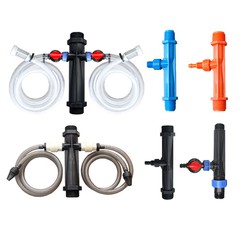
The trend towards precision management is reflected in the deep application of integrated water and fertilizer management. Modern fertilization systems are increasingly designed in conjunction with irrigation systems to achieve simultaneous irrigation and fertilization. Differentiated nutrient supply is provided to different plots or crop varieties through zoned control and variable application technologies. The precision of hardware such as proportional pumps, Venturi fertilizer extractors, and closed-loop circulation devices is constantly improving. Combined with high-precision sensors and actuators, nutrients are delivered directly to the crop root zone or leaf surface, reducing runoff and volatilization losses, thereby ensuring yield while reducing input costs.

Green integration is an inevitable requirement for the sustainable development of the industry. Facing the dual pressures of agricultural non-point source pollution control and carbon emission control, fertilization systems are evolving towards low consumption, low emissions, and resource recycling. On the one hand, the use of environmentally friendly fertilizers such as slow-release fertilizers, organic liquid fertilizers, and biostimulants is being promoted to reduce adverse impacts on soil and water. On the other hand, rainwater harvesting, irrigation reuse, and nutrient solution regeneration technologies are being combined to construct closed-loop or semi-closed-loop operation modes, reducing dependence on external resources and improving the ecological friendliness of the system throughout its entire life cycle.
Modularization and customization have become key characteristics of the industry's development. Manufacturers are increasingly offering flexibly configurable hardware platforms and software systems for different sizes and types of growers. Users can select and configure sensing, control, dispensing, and application modules as needed, and upgrade and expand as production structures adjust. The widespread adoption of cloud platforms has made remote monitoring, fault warnings, and maintenance guidance standard features, lowering the technical barriers and maintenance costs for users.
Overall, the fertilization system industry is at a critical juncture, transitioning from experience-driven to data-driven approaches, from extensive application to precision supply, and from single-function to comprehensive services. In the future, with the iteration of intelligent algorithms, the innovation of green fertilizers, and the deepening of cross-system collaborative applications, fertilization systems will play an even more crucial role in promoting high-quality agricultural development and ecological civilization construction.
Send Inquiry