






Fertilization Systems: A Powerful Tool for Precision Nutrient Supply in Modern Agriculture and Horticulture
Nov 29, 2025
Leave a message
Against the backdrop of the transformation of agricultural production and horticultural cultivation towards high efficiency, high quality, and sustainability, fertilization systems, as key equipment for achieving precision nutrient management, are receiving increasing attention.These systems scientifically allocate fertilizer types, concentrations, and application timing to deliver nutrients to the crop root zone or leaves in a controlled manner. This not only meets the nutritional needs of plants at different growth stages but also significantly reduces fertilizer waste and environmental pollution risks, providing strong support for the refined management of modern agriculture.
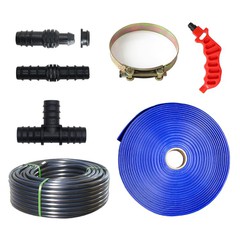
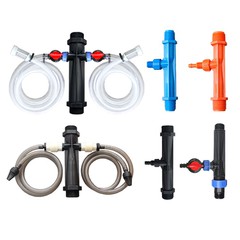
The core of a fertilization system consists of four main stages: fertilizer storage, blending, delivery, and application. Fertilizer storage containers are typically made of corrosion-resistant and airtight materials to prevent nutrient volatilization or moisture absorption and clumping. The blending unit, based on the crop's nutrient requirements and target concentration, uses proportioning pumps, Venturi fertilizer extractors, or stirring devices to uniformly dissolve solid or liquid fertilizers in water, forming a nutrient solution of appropriate concentration. The delivery process relies on water pumps and fertilizer pipelines to stably deliver nutrient solution to the field or orchard network, with distribution zoned according to terrain and crop layout. Application methods are diverse, including drip irrigation, sprinkler irrigation, micro-spraying, and foliar spraying, allowing for precise delivery targeting root absorption or foliar nutrient supplementation.
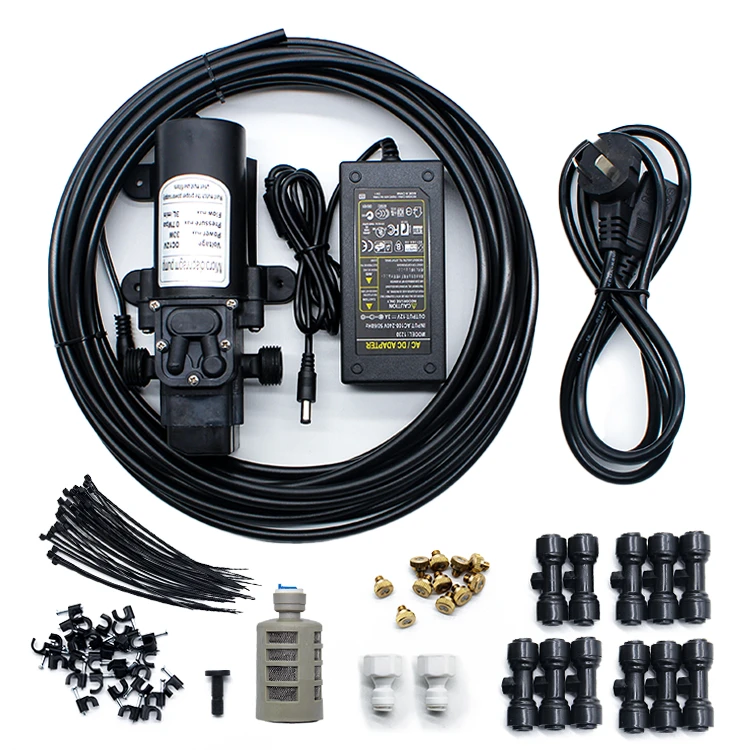
The technological advantages of the fertilization system are mainly reflected in three aspects. First, precision. Through real-time monitoring of nutrient solution concentration and pH using EC (electrochemical conductivity) and pH sensors, combined with rapid soil nutrient testing or crop growth models, the system can dynamically adjust the fertilizer formula and dosage, avoiding over- or under-application and improving fertilizer utilization. Second, efficiency. Simultaneous fertilization and irrigation reduce manual operations and shorten working time, significantly improving labor productivity, especially in large-scale farmland or large-scale horticultural parks. Third, environmental friendliness. Precise dosage control and targeted application reduce the risk of nutrient loss through water or seepage into groundwater, helping to protect the aquatic ecosystem and aligning with the direction of green agriculture development.
In terms of application scenarios, fertilization systems are widely applicable to greenhouses, orchards, tea gardens, golf courses, and urban greenbelts. Different crops have varying requirements for nutrient forms and absorption pathways. For example, root drip irrigation fertilization is suitable for trees to ensure nutrients reach the absorption layer directly; leafy vegetables can be top-dressed with sprinkler irrigation, addressing both water and fertilizer needs; and high-value-added greenhouse crops can utilize closed-loop nutrient solution circulation systems to achieve integrated water and fertilizer management, further improving resource utilization efficiency.
With the development of the Internet of Things, big data, and intelligent control technologies, fertilization systems are evolving towards greater intelligence and integration. By linking with weather stations, soil moisture monitoring, and crop growth recognition systems, dynamically optimized fertilization decision-making models can be constructed, achieving on-demand supply and full traceability. In the future, its role in promoting reduced fertilization and increased efficiency in agriculture, ensuring the quality and safety of agricultural products, and promoting sustainable agricultural development will become even more prominent, making it an indispensable intelligent core of modern agriculture.
Send Inquiry