






Garden Irrigation System Solutions: Building a New Era of Efficient and Water-Saving Horticultural Management
Nov 28, 2025
Leave a message
With the rapid development of urban greening and home gardening, traditional manual irrigation methods are no longer sufficient to meet the needs of diverse plant care and intensive resource utilization.Garden irrigation system solutions, centered on systematic design, intelligent control, and precise water application, integrate water source management, pipeline layout, sensor monitoring, and terminal execution. They provide scientific, efficient, and sustainable water supply models for garden spaces of different sizes and types, and are becoming the standard configuration for modern horticultural management.
A complete garden irrigation system solution first emphasizes site-specific and demand-oriented approaches during the planning stage. Through a comprehensive survey of the park's topography, soil type, plant community distribution, and climate characteristics, the irrigation methods and water quotas for each area are clearly defined. For example, rotating sprinklers are suitable for creating uniform coverage in open lawns, micro-sprinklers can be used in flower and shrub areas to prevent overwetting of leaves and the resulting diseases, while drip irrigation pipes can be laid for precise watering of the root zone for trees and cash crops. On sloping terrain or sites with significant topographic relief, pressure compensation technology and zoned water supply design ensure consistent water volume and range at all points, eliminating uneven irrigation caused by gravity differences.
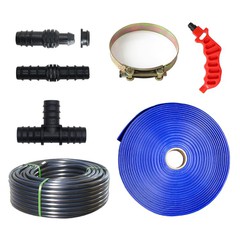
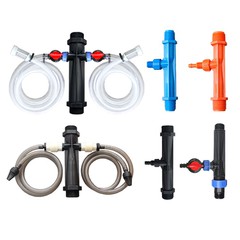
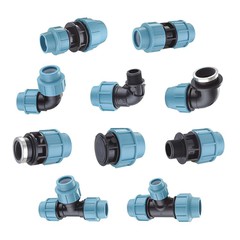
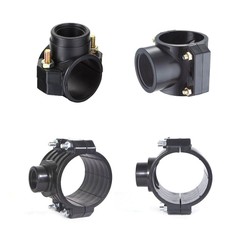
In terms of hardware architecture, the solution encompasses a stable and reliable water supply system, a modular distribution network, and diverse terminal devices. Water sources can be municipal water supply, groundwater, reservoirs, or rainwater harvesting systems, equipped with appropriate pre-filtration and water quality conditioning devices to prevent damage to equipment from particulate matter, algae, and other impurities. Pipeline materials must possess pressure resistance, aging resistance, and impermeability; the appropriate diameter and layout of branch pipes and capillary pipes minimize hydraulic losses. Terminal devices are flexibly selected based on water demand characteristics, with provisions for expansion and replacement to accommodate plant succession or functional zone adjustments.
Intelligent control is the core advantage of the solution. Utilizing real-time environmental data collected from soil moisture sensors, weather stations, and rain gauges, combined with evapotranspiration models and user-defined irrigation strategies, the central controller automatically generates and executes zoned, time-based, and quantitative irrigation plans. Solenoid valves and zone controllers enable remote or local on/off switching, forming a closed-loop feedback loop to effectively prevent overwatering or underwatering. The system can also be connected to an IoT platform, enabling remote monitoring, alarm push notifications, and historical data analysis via mobile devices or computers, providing a basis for continuous optimization of irrigation plans.
At the operation and maintenance level, the solution emphasizes standardization and operability. By establishing a schedule for inspection, cleaning, and component replacement, it ensures that the filtration system, sensor probes, sprinklers, and drippers remain in good condition; during cold seasons, drainage and antifreeze measures are implemented to prevent low-temperature damage; for systems using reclaimed water or rainwater, enhanced microbial control and water treatment processes ensure unobstructed pipelines and plant safety.
Looking to the future, garden irrigation system solutions will further integrate renewable energy drives, intelligent learning algorithms, and ecological cycle modules to achieve self-sufficient water supply, accurate forecasting, and low-carbon operation. Its comprehensive value in improving horticultural quality, reducing maintenance intensity, and promoting the construction of a water-saving society is driving horticultural management into a new, smarter, and more sustainable stage.
Send Inquiry