






Garden Irrigation System Technical Features: A Precise, Intelligent, And Sustainable Integration
Oct 28, 2025
Leave a message
As a core technology in modern horticultural management, garden irrigation systems integrate hydraulic delivery, sensor monitoring, automatic control, and water-saving techniques, showcasing multi-dimensional technological advantages. Their design philosophy focuses on meeting the water requirements of different plant growth patterns, while also considering efficient resource utilization and ease of management, demonstrating distinct technical characteristics in urban and rural greening, courtyard maintenance, and landscape creation.
The primary feature is precise water supply. Based on plant species, root distribution, and soil physicochemical properties, the system flexibly configures terminal devices such as rotating sprinklers, micro-sprinklers, and drip irrigation pipes to achieve uniform water distribution and direct delivery to the root zone within the effective area. Drip irrigation and micro-sprinkler technologies apply water directly to the plant's absorption layer, significantly reducing surface evaporation and runoff loss, ensuring maximum water utilization. For slopes or complex terrain, the application of pressure compensation technology eliminates variations in flow rate and range caused by elevation differences, maintaining consistent irrigation across the entire area.
Secondly, there is intelligent control. The system is equipped with soil moisture sensors, weather monitoring stations, rain gauges, and other sensing devices to collect real-time data on soil moisture, evaporation, temperature, sunlight, and rainfall. This data is then comprehensively analyzed by a central controller or cloud platform. Based on preset strategies or self-learning algorithms, the controller can automatically generate zoned, time-based, and quantitative irrigation plans, driving solenoid valves to precisely open and close, achieving on-demand water supply. Users can set parameters and monitor status through a local interface or remote terminal, forming a closed-loop feedback loop that improves management flexibility and response speed.

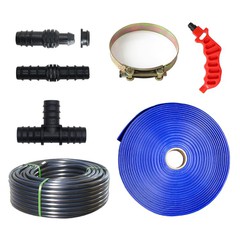
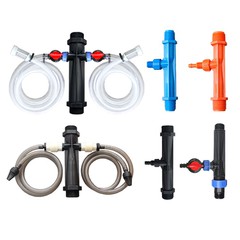
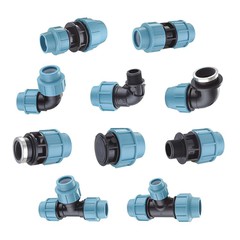
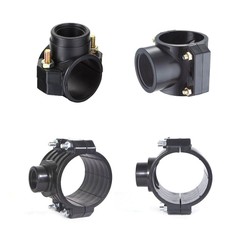
Thirdly, it features modularity and scalability. The hardware architecture adopts a layered layout of main pipes, branch pipes, and capillary pipes, with materials that combine pressure resistance, aging resistance, and seepage prevention, facilitating future maintenance and localized modifications. The control terminal supports multi-loop zone management, allowing for the addition or removal of irrigation areas or replacement of terminal devices as needed, adapting to plant succession and functional adjustments. Filtration, pressurization, and water quality regulation units can also be independently configured and upgraded, ensuring stable operation of the system under different water source conditions.
Furthermore, it is water-saving and eco-friendly. Through precise application and time-based optimization, the system can save more than 30% of water compared to traditional flood irrigation, and reduce soil compaction and nutrient loss caused by over-watering. Some solutions integrate rainwater harvesting and reuse modules to achieve water resource recycling; combined with cold-resistant, anti-clogging, and self-cleaning designs, it can reduce operating energy consumption and maintenance frequency, aligning with the green and low-carbon development trend.
Finally, high reliability and ease of maintenance are also important features. Key components such as solenoid valves, sensors, and controllers have undergone rigorous environmental adaptability verification, and can operate for extended periods under high temperature, high humidity, dusty, or mildly corrosive conditions. Standardized interfaces and clear inspection and maintenance procedures make fault location and component replacement simple and efficient, ensuring continuous and stable system operation.
In summary, the garden irrigation system, with its core technological characteristics of precision, intelligence, modularity, water conservation, ecology, and high reliability, not only significantly improves the quality and efficiency of horticultural maintenance but also provides solid technical support for building resource-saving and environmentally friendly green spaces.
Send Inquiry