






Garden Irrigation System Working Principle
Oct 27, 2025
Leave a message
A garden irrigation system is a comprehensive horticultural facility integrating hydraulic delivery, sensor monitoring, and automatic control technologies. Its core objective is to supply plants with the necessary water at the appropriate time and location, with the appropriate flow rate and method. Through the coordinated operation of various components, the system organically combines the water source, pipe network, control logic, and terminal devices, achieving a shift from "passive irrigation" to "active water supply," thereby maximizing water resource utilization efficiency while ensuring healthy plant growth.
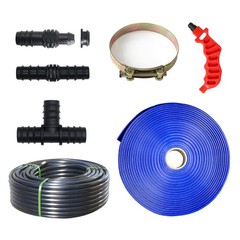
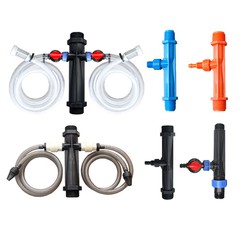
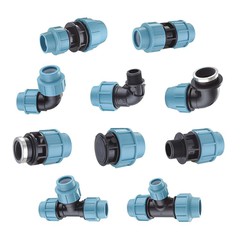
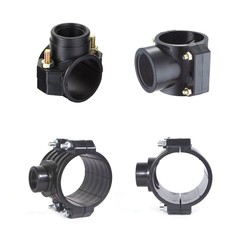
The system's workflow begins with water supply. Municipal tap water, reservoirs, or rainwater harvesting devices provide raw water, which is pressurized to a stable pressure by pumps before entering the main pipe network. The pipe network consists of main pipes, branch pipes, and capillary tubes, forming a tree-like or ring-like distribution. The materials used must be pressure-resistant, anti-aging, and leak-proof to ensure controllable pressure loss and stable water flow during delivery. Control valves and branch interfaces are installed at pipe network nodes to allow for independent management of different irrigation areas.
The Control link (control link/component) is the key to the system's intelligence. The central controller or zone controller receives real-time data from sensors, including soil moisture, ambient temperature, air humidity, light intensity, and recent rainfall. Soil moisture sensors are embedded in the root zone of different vegetation types to accurately reflect actual water demand; meteorological data is used to predict evapotranspiration, providing environmental references for irrigation decisions. The controller calculates irrigation timing and duration based on preset algorithms or user-defined strategies and sends opening and closing commands to the solenoid valves in the corresponding zones. Upon receiving the electrical signal, the solenoid valves use electromagnetic force to displace their valve cores, opening or closing the water supply to that zone and time, achieving zoned and time-based water supply.
The terminal devices are responsible for converting the water flow into suitable application patterns. Rotary sprinklers use centrifugal force to atomize water and spray it in a fan or circular pattern, suitable for large lawns and open flower borders; micro-sprinklers produce a fine mist with a small and uniform coverage radius, suitable for seedlings and flowers; drip irrigation pipes are laid along crop rows, with numerous water outlets or internal channels in the pipe walls, allowing water to slowly seep into the root zone, reducing evaporation and surface runoff, especially suitable for arid regions or crops requiring strict humidity control. The selection and placement of different devices must comprehensively consider plant species, soil permeability, and terrain slope to ensure even water distribution and avoid waterlogging or erosion.
The entire system continuously optimizes the water supply scheme through a closed-loop process of sensing, analysis, execution, and feedback during its operation. Some advanced systems can also interconnect with remote monitoring platforms or mobile terminals to achieve data visualization and remote intervention, further enhancing management flexibility and response speed. It is this collaborative mechanism based on sensing and precise control that enables garden irrigation systems to demonstrate significant technological advantages and application value in improving horticultural quality, saving resources, and reducing maintenance intensity.
Send Inquiry