






Exploring the Functional Foundation of Drip Irrigation Systems
Nov 14, 2025
Leave a message
The effectiveness of drip irrigation systems in modern agriculture, enabling precise irrigation and efficient resource utilization, stems from their scientifically sound functional foundation. This foundation comprises water supply, pressure-driven operation, filtration and purification, distribution and delivery, precise water output, and control management, forming a complete closed loop from water intake to root zone application. This ensures that water and nutrients are distributed to the crop growth area in a controlled and uniform manner.
First, a stable and reliable water supply is a prerequisite for system operation. Whether surface water or groundwater, it must have a continuous water output capacity and meet basic cleanliness requirements. For water sources with high sand content or impurities, preliminary interception and sedimentation treatment is necessary to reduce the load on subsequent filtration and prevent channel blockage and equipment wear.
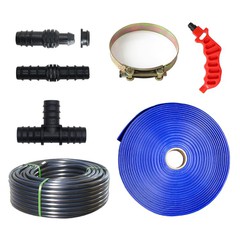
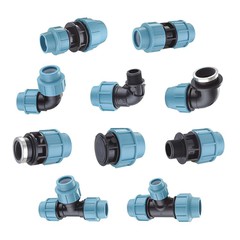
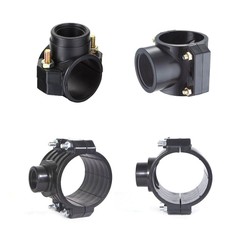
Second, pressure-driven operation and pipeline delivery constitute the system's backbone. Pumps or other pressurizing devices provide the necessary operating pressure, keeping the water flowing within the closed pipeline. Main pipes, branch pipes, and capillary pipes are laid out in stages according to the terrain and crop layout, utilizing the connectivity of the pipeline network to transport water from the headworks to the field ends. The pipeline design must balance hydraulic balance and control flow losses to ensure uniform irrigation across the entire field.
Filtration and purification are crucial for the long-term operation of the system. Suspended particles and algae in the water can easily clog the flow channels if they enter the emitters, affecting the stability of the output water. Filtration methods such as screens, sand, centrifugal filters, or disc filters can be combined according to water quality characteristics to achieve step-by-step interception of impurities of different particle sizes, ensuring that the cleanliness of the irrigation water meets equipment requirements.
Precise water output is achieved through the emitters. Terminal devices such as drippers and embedded drip tapes use micro-channels or flow-limiting orifices to infiltrate water at low flow rates and high frequencies, creating localized humidification zones. Their structural design determines flow consistency, anti-clogging properties, and the output range, directly affecting irrigation quality and the water absorption environment for crop roots.
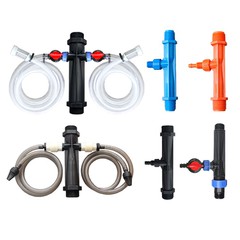
Control and management functions give the system flexibility and adaptability. Through valves, pressure regulators, fertilization equipment, and monitoring instruments, precise control of irrigation time, water volume, and pressure can be achieved, and water-fertilizer ratios and operational plans can be adjusted based on external information. In automated configurations, sensing and remote control technologies further enhance response speed and the scientific nature of decision-making.
Overall, the functional foundation of drip irrigation systems integrates multiple engineering technologies, including fluid delivery, purification and anti-clogging, precise distribution, and intelligent regulation. These interconnected technologies ensure stable and efficient targeted water and fertilizer supply even under varying environmental conditions and diverse crop environments, providing reliable support for the precision management of modern agriculture.
Send Inquiry