






Garden Irrigation Systems: A Smart Choice for Refined Horticultural Management
Nov 26, 2025
Leave a message
With the increasing popularity of urban greening and home gardening, garden irrigation systems have evolved from traditional manual watering to automated and precise systems, becoming an important technological means to improve plant care quality and conserve water resources. Through the scientific layout of the distribution network and automatic control devices, this system achieves on-demand and quantitative water supply, meeting the water requirements of different plants while significantly reducing labor costs and water waste, demonstrating significant advantages in modern horticultural management.
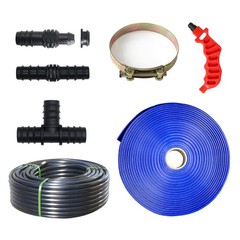
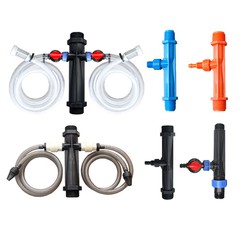
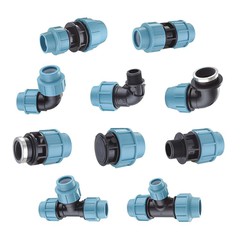
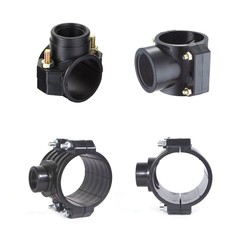
The core of a garden irrigation system consists of a water source, a water supply network, control equipment, and end-point sprinkler systems. The water source can be municipal tap water, reservoirs, or rainwater harvesting systems, which are then stably delivered to the pipeline network via pressurization equipment. The water supply network is laid out with branch pipes and capillary pipes according to the park layout to ensure even water coverage of the planting area. Control equipment includes timer controllers, solenoid valves, and sensors, which can start and stop irrigation according to preset programs or real-time environmental data, and adjust water volume by zone. Terminal devices are selected from various forms such as sprinklers, drip irrigation pipes, and micro-sprinklers based on plant type and terrain conditions to achieve targeted and quantitative water supply.
Its technological advantages are reflected in three aspects. First, precision: by collecting soil moisture, evaporation, and rainfall data through soil moisture sensors and weather stations, the system can dynamically adjust irrigation strategies to avoid over- or under-watering, especially suitable for water-sensitive lawns, flowers, and shrub communities. Second, water-saving and efficient: drip irrigation and micro-sprinkler technologies can deliver water directly to the roots or canopy, reducing surface runoff and evaporation losses, saving 30% to 50% of water compared to traditional flood irrigation, aligning with the trend of intensive resource utilization. Thirdly, automation and intelligence are key features. Timed control and remote monitoring functions allow users to set irrigation times and cycles as needed. Some systems can also connect to smart home platforms for unattended management, significantly improving maintenance efficiency.
In terms of application scenarios, this system is widely adaptable to courtyards, parks, golf courses, and agricultural tourism parks. Differentiated irrigation can be achieved through zoned control for different terrains and plant configurations-for example, rotating sprinklers in tree areas ensure coverage, drip irrigation pipes in flower beds prevent water from getting on leaves and causing diseases, and pressure compensation devices on slopes evenly distribute water to ensure uniform irrigation.
With the integration of the Internet of Things and water-saving technologies, garden irrigation systems are evolving towards a smarter and more ecological direction. In the future, deep integration with rainwater harvesting and water purification modules will further promote the green and low-carbon transformation of horticultural management, injecting sustainable momentum into urban landscape and ecological construction.
Send Inquiry