






Structural Composition and Functional Analysis of Drip Irrigation Systems
Nov 11, 2025
Leave a message
As a highly efficient and water-saving precision irrigation method, the stable operation of a drip irrigation system relies on a scientifically rigorous structural design. The system consists of four core components: the water source project, the headworks, the water distribution network, and the emitters. These components work together to achieve the targeted and quantitative delivery of water and nutrients.
The water source project is the starting point of the system's operation, encompassing natural or artificial water sources such as rivers, reservoirs, wells, and water storage tanks. It must meet the requirements of stable water quantity and basic water quality cleanliness. For water sources with high sediment content or many impurities, pretreatment facilities such as sedimentation and sediment traps are usually installed to reduce the burden on subsequent filtration and protect system components.
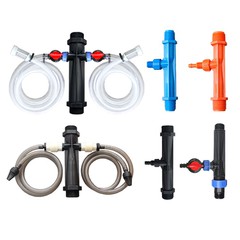
The headworks is the system's "control center," concentrating key equipment for filtration, pressurization, fertilization, and control. Filters remove suspended solids from water using screens, centrifugation, or sand and gravel to prevent dripper clogging; pressurization equipment (such as water pumps) ensures the pipeline network maintains appropriate operating pressure, guaranteeing uniform water delivery; fertilization devices dissolve liquid or solid fertilizers into irrigation water, enabling simultaneous water and fertilizer application; control valves and instruments regulate flow and pressure and monitor operating status, improving operational accuracy and safety.
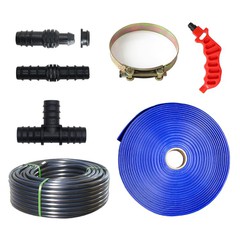
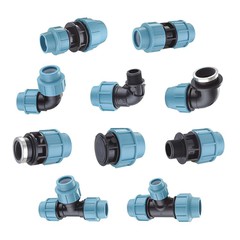
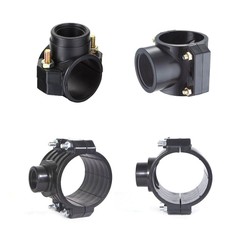
The water distribution network undertakes the long-distance transportation and distribution of water, including different levels such as main pipes, branch pipes, and capillary pipes. Main pipes and branch pipes are mostly made of pressure-resistant and corrosion-resistant materials such as PVC or PE, buried underground or fixed to surface supports, responsible for transporting water from the headworks to the fields; capillary pipes are close to the crop rows, with smaller diameters and denser distribution, their function being to evenly distribute water to each irrigation unit. The pipeline network layout needs to be optimized in conjunction with terrain, crop spacing, and planting patterns to reduce hydraulic loss and ensure coverage without dead zones.
Irrigation devices are the end-effectors of the system, common types including drippers and drip tape-embedded drippers. It uses tiny channels or orifices to drip water, creating localized wet zones and preventing surface runoff and deep seepage. The consistency of the irrigation flow and its anti-clogging performance directly affect the uniformity of irrigation and the system's lifespan; therefore, it is essential to select the appropriate type based on the crop's water requirements and soil texture.
Overall, the drip irrigation system has an interconnected structure, with each step from the water source to the root zone reflecting a pursuit of precision and efficiency, providing a solid hardware foundation for water-saving and yield-increasing agriculture in modern times.
Send Inquiry